
Textured Canvas Art Ideas That Feel Architectural, Not Overdone
Textured canvas art works best when it behaves like plaster, stone, or linen on a wall, not like a craft project. This guide walks through sofa, bed, entry, hallway, and dining placements, with notes on scale, light, and the mistakes that make textured pieces feel busy instead of architectural.
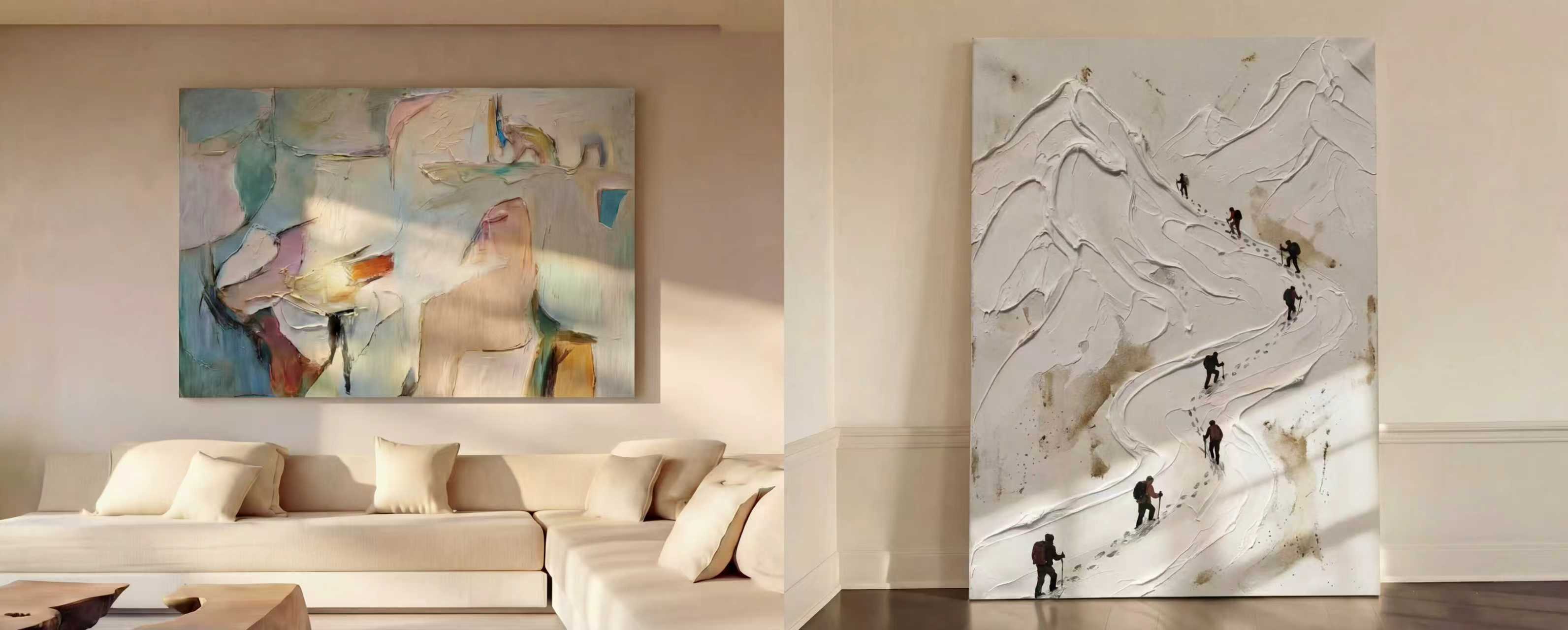
Good textured canvas art ideas share one trait: they behave like a wall finish, not a decoration. Think plaster shadow, raked stone, pressed linen. The relief carries the piece, so the palette can stay quiet and the room stays calm.
If you want texture that reads architectural rather than busy, start with three rules. Keep the color range tight. Go larger than feels safe. Hang it where natural or lamp light crosses the surface at an angle, because that grazing light is what makes texture look intentional.
Above the Sofa: The Most Forgiving Place to Start
A sofa wall is where textured canvases earn their keep. The viewing distance is generous, so deep relief reads as sculpture instead of noise. Aim for a single piece roughly two-thirds the width of the sofa, hung with about 6 to 10 inches of breathing room above the back cushions.
For a linen or boucle sofa in oatmeal, a chalk-white plaster-style canvas disappears into the palette and lets the shadows do the work. Over a darker sofa, a warm bone or clay tone keeps contrast soft. Avoid high-gloss frames here; a raw wood float frame or no frame at all suits the matte surface.
Over the Bed: Quiet Relief, Low Contrast
Bedrooms are where textured art tends to go wrong, usually because the piece is too small or too loud. A headboard wall wants one oversized horizontal canvas, or a pair hung tight together, in a tone within two shades of the wall color.
- King bed: one canvas around 60 to 72 inches wide, or a diptych that spans the headboard.
- Queen bed: a single 48 to 60 inch piece, centered, 4 to 8 inches above the headboard.
- Palette cue: match the undertone of your bedding, not the exact color.
Sculptural ridges, soft arches, and subtle wave reliefs all work here because they suggest movement without demanding attention at 11 p.m.
The Entry Wall: Where Texture Does the Most Work
Entryways are usually short on daylight and long on flat drywall. A textured canvas fixes both problems. Because you view entry art from only a few feet away, surface detail actually matters more here than in a living room.
A vertical format suits most foyers, especially next to a console or bench. Look for deeper relief, carved-line patterns, or a stone-like finish that reacts to a single overhead light or sconce. If your entry is narrow, a tall piece around 24 by 48 inches pulls the eye up and makes the ceiling feel higher.
Hallways: Rhythm Beats Size
Long hallways are the one place where a series works better than a single statement. Three or four smaller textured canvases, hung at equal intervals with consistent centers, create a rhythm that pulls people down the space.
Keep the frames identical and the palette within one family, for example all bone, all ash, or all warm gray. Mixed textures within that palette, say a ridged piece next to a smoother plaster one, add interest without breaking the architectural feel. This is also where organic modern pieces tend to land well, because their shapes are soft enough to repeat.
Dining Rooms: Scale Up, Calm Down
Dining walls can handle the biggest pieces in the house. You are almost always seated when you look at them, which changes the sightline and lets a very large canvas feel grounded rather than overbearing.
A 60 to 80 inch horizontal textured canvas above a sideboard or centered on the long wall works in almost any dining room. Stay away from shiny finishes that fight candlelight or pendant glare. Matte surfaces with low, sculptural relief, think drifted sand or soft fluted lines, photograph well and live well.
A Quick Note on What Textured Canvas Actually Is
People often ask what texture art painting means in practice. It is any canvas where the surface itself is built up, usually with a plaster-based medium, modeling paste, or heavy acrylic, so the artwork has real physical relief rather than printed depth. The best plaster for canvas art is typically a light, flexible modeling paste that will not crack when the canvas flexes, which is why quality matters more than thickness.
Mistakes That Make Textured Art Look Crafty
- Going too small. Undersized textured pieces read as samples, not art. When in doubt, size up.
- Too many colors in the relief. Multi-tone textured canvases almost always look busier in person than online.
- Glossy frames on matte surfaces. The finish mismatch flattens the texture.
- Flat, overhead lighting only. Without a side or angled light source, relief disappears.
- Hanging too high. Center the piece around 57 to 60 inches from the floor, not from the ceiling.
FAQ
What rooms suit textured canvas art best?
Living rooms, primary bedrooms, entryways, and dining rooms. Kitchens and bathrooms are trickier because of humidity and grease.
Does textured canvas work in small spaces?
Yes, especially in entries and hallways, as long as the piece is scaled to the wall and the relief is not overly deep.
How do I light a textured canvas?
Use a light source that hits the surface at an angle. A picture light, a sconce, or a floor lamp off to one side will reveal the relief far better than a ceiling fixture directly above.
Should I frame a textured canvas?
Optional. A simple float frame in raw oak, walnut, or matte black can sharpen the piece, but unframed gallery-wrapped canvases often feel more architectural.
How do I clean textured canvas art?
Dust gently with a soft, dry brush. Avoid damp cloths, which can lift or discolor plaster-based surfaces.
If you want a starting point that already leans architectural rather than crafty, Browse textured canvas art and look first at the pieces with the tightest palettes and the largest formats.