
Still Order: The Textured Grid Wall Art That Does More With Less
The Minimalist Textured Grid Still Order is a large-format hand-painted wall art piece built from rows of low-relief rectangular forms arranged across a weathered stone-toned ground. It reads as quiet and structured without feeling rigid, making it one of the more genuinely versatile neutral statement pieces for living rooms, home offices, and bedrooms styled in a minimalist or wabi-sabi direction.
Quick read
Ordered without being cold, textured without being busy — this is wall art that earns its place by doing almost nothing loudly.
Product reference
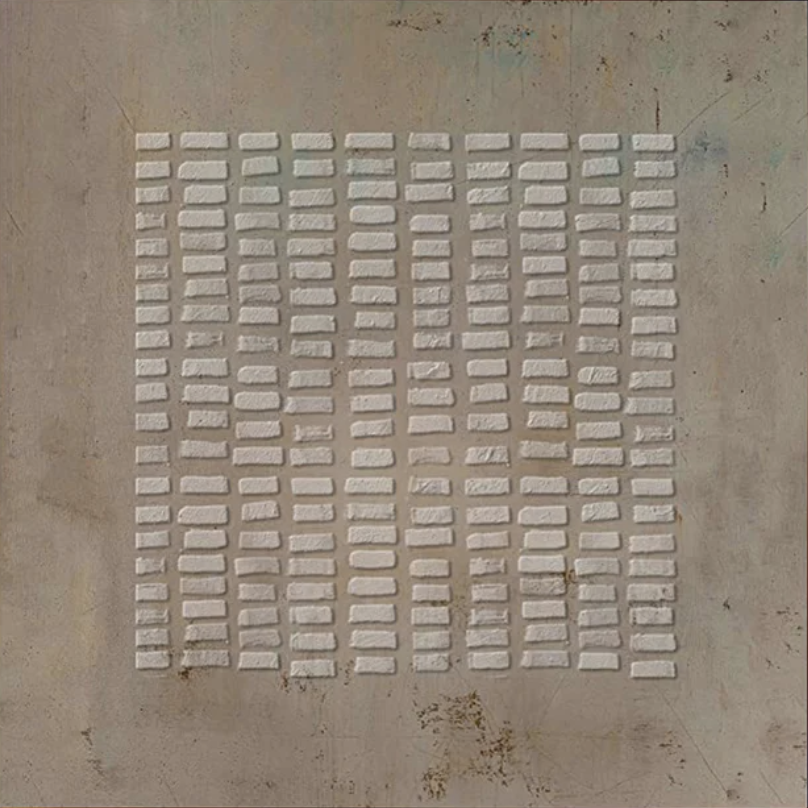
At first glance, it reads like a grid. Look longer, and something more considered comes through. The Minimalist Textured Grid Still Order is a large-format hand-painted wall art piece made up of small, low-relief rectangular forms — each one off-white, slightly irregular, and arranged across a stone-toned ground that carries faint traces of ochre and grey. The result sits somewhere between sculpture and painting, which is part of what makes it so useful in a room.
What You're Actually Looking At
This is a 3D plaster relief piece, not a print. Each rectangular unit is built up from the surface in a way that catches light differently depending on the time of day and where the piece is hung. In direct morning light, the shadows between forms become more pronounced, and the grid reads with real depth. Under warmer evening lamp light, the off-white surface softens and the whole composition feels more muted and organic.
The background isn't a flat neutral — it has a patina to it, a quiet layering of warm and cool tones that gives the piece material weight beyond the white forms sitting on top of it. That background is what separates this from a simpler geometric canvas. It makes the piece feel assembled rather than manufactured.
How It Changes a Room
Scale matters here. Hung above a low, linear sofa, the grid fills the wall with enough presence to anchor the seating arrangement without competing with furniture or soft goods. It doesn't shout. What it does instead is give the wall a reason to exist — a sense of composition that makes the whole room feel more deliberate.
In a home office placed on the wall directly facing the desk, it functions almost like a visual resting point. The repetition is orderly enough to feel structured, but the slight variation in texture across individual pieces keeps it from feeling mechanical or corporate. It works in that context without being precious about it.
Behind a bed headboard, the measured rhythm reads as calm rather than clinical. Paired with warm white plaster walls, light oak, and linen upholstery, it fits quietly into a Japandi or contemporary wabi-inspired interior without demanding to be the loudest thing in the space.
Who This Is Really For
This piece suits buyers who want texture and presence without color commitment. If your space is built around warm neutrals — taupe, off-white, greige, natural wood tones — this fits without negotiation. It also works for anyone who wants something that reads as art-forward without being overtly expressive or figurative.
It's less suited to rooms that already carry strong pattern, saturated color, or a lot of competing visual texture. The grid's restraint is a strength in calm interiors; in a busier room it may simply disappear.
Realistic Expectations
Because this is hand-painted and textured, minor surface variation between units is part of the piece — not a flaw. Buyers expecting pixel-perfect uniformity will want to recalibrate. The slight irregularity is intentional and is precisely what gives the composition its handmade, material quality.
Lighting placement matters more than it would with a flat print. A wall with some natural daylight or a directed picture light will bring out the relief texture. A poorly lit corner will flatten the piece considerably.
How It Compares
Against a standard abstract canvas in neutral tones, this reads with more physical presence — the raised surface adds a dimension that a flat print can't replicate. Against other 3D wall art pieces that lean more decorative or ornamental, this one holds its ground through geometry and restraint rather than visual elaboration. It's closer in feeling to architectural detail than to decorative accent.
Product Details
- Type: Hand-painted, 3D plaster relief on canvas
- Size: Large format
- Color direction: Off-white forms on a stone, ochre, and grey ground
- Texture: Low-relief raised surface with natural variation across units
- Finish: Matte, plaster-like surface
- Best rooms: Living room, home office, bedroom
- Interior styles: Minimalist, Japandi, contemporary wabi-inspired
- Works well with: Light oak, warm white linen, soft taupe upholstery
- Placement notes: Most effective above low furniture on a plain wall; benefits from directional natural or artificial light
If this direction feels right for your space, you can find full sizing and details on the Minimalist Textured Grid Still Order product page.