
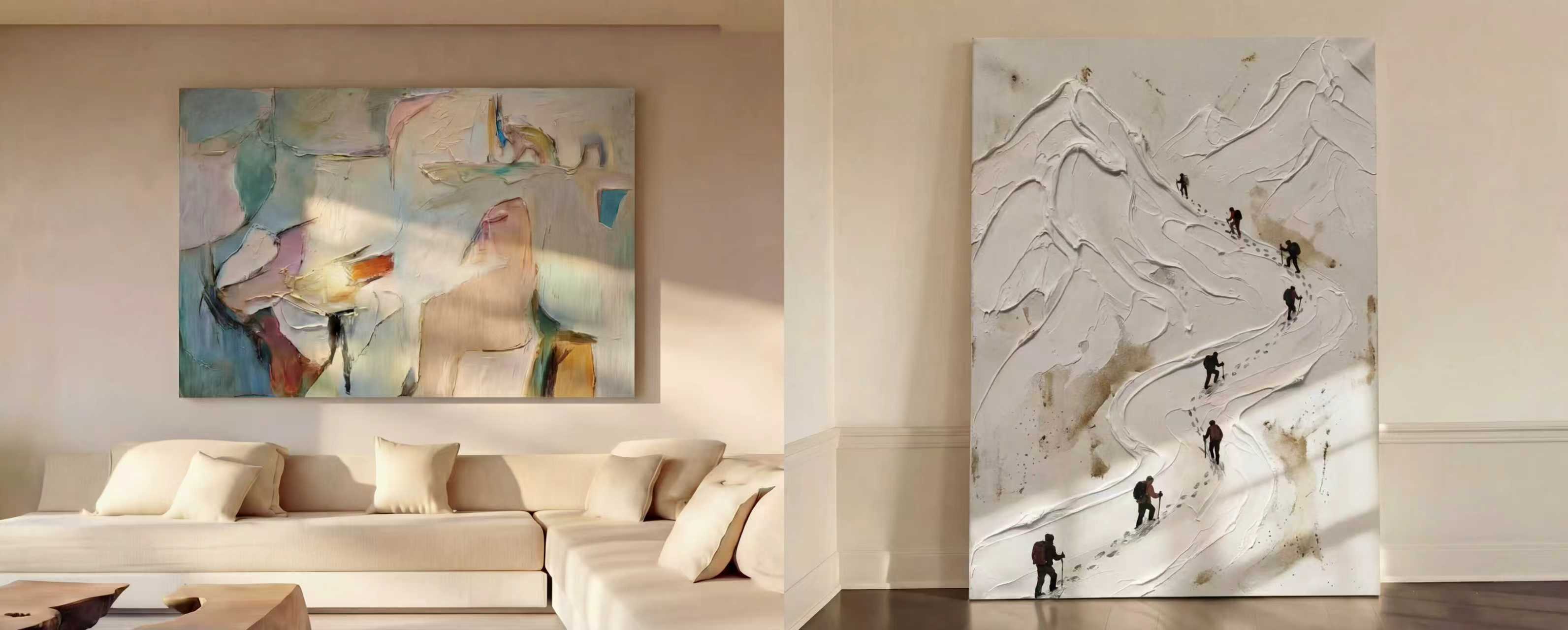
Definition of Geometric Art and Where It Fits at Home
Geometric art uses circles, triangles, grids, and angular forms as the main subject. It can be bold and graphic or quiet and minimal, which is why it slips into modern, mid-century, and minimalist rooms so easily. This guide breaks down the definition, compares it to nearby styles, and shows where it actually works at home.
The simplest definition of geometric art: visual work built from defined shapes, lines, grids, and repeating patterns instead of realistic scenes. Circles, triangles, hexagons, arcs, and intersecting lines carry the composition.
It can feel calm or graphic, warm or icy, depending on color and scale. That flexibility is why it shows up in everything from a quiet hallway print to an oversized statement piece above a sofa.
What counts as geometric art
If the shapes themselves are the subject, it's geometric. That includes hard-edge compositions, Bauhaus-style color blocks, op art with optical patterns, sacred geometry motifs, line-based grids, and modern digital prints built from vector forms.
What it usually is not: landscapes, portraits, florals, or expressive brushwork meant to capture mood through gesture. Those lean abstract or representational, even when they include a stray triangle.
Geometric vs abstract vs minimalist
These three get blended online, but they behave differently on a wall.
- Geometric: structured, measurable, pattern-driven. Think repeating arches or a grid of circles.
- Abstract: non-representational but loose. Color, gesture, and texture lead. Shapes may appear, but they aren't the rule.
- Minimalist: defined by restraint, not shape. A single line or a wide field of color can be minimalist without being geometric.
Plenty of pieces overlap. A black-and-white print of three stacked rectangles is geometric and minimalist. A soft blurred color field is abstract and minimalist but not geometric.
Where monochromatic fits in
People often ask what is monochromatic art in the same breath. Monochromatic refers to color, not form. It means a work uses one hue in varied tints, tones, and shades. Geometric art can be monochromatic, polychromatic, or black and white. The two terms describe different layers of the same piece.
If you want a calm room, a monochromatic geometric print, say, five shades of terracotta arranged in arches, gives structure without visual noise.
Where geometric art actually works at home
This style earns its keep in rooms with clean lines or repeated architectural shapes.
Living rooms
A large geometric print above a low sofa anchors the seating area. Choose one with breathing room around the shapes so it doesn't fight patterned rugs or textured throws.
Home offices
Grid-based or line-based prints read as focused and orderly. They pair well with neutral desks and matte black hardware.
Bedrooms
Skip high-contrast op art over the bed. Soft, monochromatic geometric work, blush, sand, sage, keeps the room restful while still feeling considered.
Entryways and hallways
Narrow walls reward vertical compositions: stacked circles, ladder-like lines, or a tall arch motif. Two matching prints flanking a console table also works.
Dining rooms
Bold color-block geometric pieces hold their own against a statement light fixture. This is one of the few rooms where bigger and louder usually wins.
When not to buy geometric art
It's not the right pick for every space. Skip it, or use it sparingly, when:
- Your room already has busy patterns: Moroccan rugs, floral wallpaper, heavily veined stone. Adding a grid print creates visual static.
- You're going for a soft, romantic, or cottage feel. Hard edges undercut that mood. Botanical or painterly abstract work suits it better.
- The wall is small and crowded. Geometric prints need negative space to read clearly.
- You want warmth above all. Geometric tends to feel structured. Pair it with wood, linen, or textured ceramics, or choose minimalist pieces with softer palettes.
How to choose a geometric piece that lasts
A few practical filters before you commit:
- Scale first, style second. Measure your wall and aim for art that fills roughly two-thirds of the furniture below it.
- Limit the palette. Two or three colors that already exist in your room will age better than a rainbow print.
- Check the line weight. Thin lines read elegant and quiet. Thick blocks read graphic and loud. Match this to the room's energy.
- Frame intentionally. Black frames sharpen the geometry. Natural wood softens it. White frames disappear and let the shapes lead.
If you're still deciding between styles, browsing a curated abstract art selection alongside geometric options helps you see which mood your room actually wants.
FAQ
Is geometric art the same as abstract art?
No. Geometric art is built from defined shapes and patterns. Abstract art is broader and often gestural or color-driven without strict form.
Can geometric art be colorful?
Yes. It can be monochromatic, black and white, pastel, or saturated. The defining trait is the shapes, not the palette.
Does geometric art work in traditional homes?
It can, in small doses. A single framed geometric print in an entry or office adds contrast without clashing with traditional furniture.
What rooms suit geometric art best?
Living rooms, offices, dining rooms, and modern bedrooms. It pairs naturally with mid-century, Scandinavian, and contemporary interiors.
How big should a geometric print be above a sofa?
Aim for a width around two-thirds of the sofa. Going smaller often looks lost; going slightly larger usually looks intentional.
When you're ready to see options side by side, browse our Geometric and abstract wall art collection and pick the piece that matches your room's rhythm.