
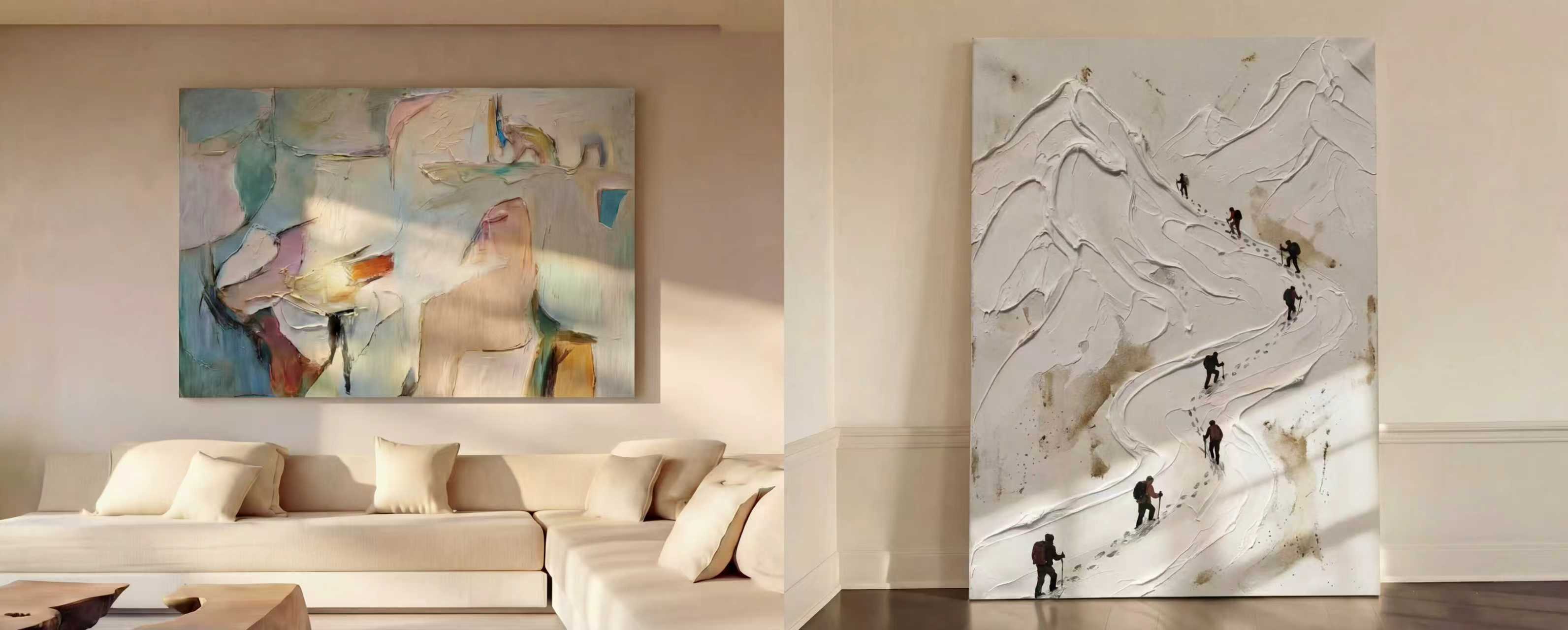
Where Can You Find the Best Contemporary Art for Sale Without Ending Up With Generic Decor
If you want contemporary work that feels considered rather than mass-produced, focus on sellers who name their artists, explain their process, and offer both originals and limited prints. The marketplace matters less than what the seller is willing to tell you about the work.
Quick read
Good contemporary art is sold with context. Generic decor is sold with adjectives.
Browse related artShort answer: the best contemporary art for sale tends to come from curated online galleries, independent artist sites, and design-forward brands that publish editions and originals with real attribution. The mass marketplaces will sell you something that looks like art, but rarely something with a point of view.
So the real question isn't where to click. It's how to tell the difference between a piece that will hold up on your wall for ten years and a trending image that 40,000 other people are also hanging in their living rooms.
Where can you find the best contemporary art for sale right now
There are four reliable categories worth knowing, each with trade-offs.
- Curated online galleries (Saatchi, Tappan, Uprise, Artsy): vetted artists, fair pricing transparency, mix of originals and editions. Good for discovery.
- Independent artist studios and Instagram shops: you pay closer to the artist, but you do the curation work yourself.
- Design-led wall art brands: smaller catalogs, stronger editorial point of view, prints produced to a consistent quality standard. Better for buyers who want a finished look without commissioning.
- Local galleries and open studios: still the best way to see scale, texture, and color in person before committing.
Skip anything that won't tell you the artist's name, the medium, or whether the piece is an original, a limited edition, or an open-run print. That information is the floor, not the ceiling.
Original painting vs print: which one should you actually buy
This is where most comparison shoppers get stuck, so here it is plainly.
Buy an original when you want texture you can see from across the room, when the piece is going somewhere you'll spend years looking at it, or when you're starting to think of art as something you keep rather than swap. Originals appreciate slowly, sometimes not at all, but they carry a presence prints can't fake.
ature
Buy a print when you want a specific artist or aesthetic at a livable price, when you're filling a larger wall plan with multiple pieces, or when the room itself might change in two or three years. Look for limited editions (numbered, signed, capped run) over open editions when you can. Paper weight, ink type (giclée is the standard worth asking about), and whether the print is signed all matter more than the size of the edition.
The honest middle ground: a well-produced limited print from a strong contemporary artist usually beats a mediocre original from someone still finding their voice.
What separates real contemporary art from generic decor
A few practical tells:
- Attribution. Real work names the artist on the listing, not just a stock title like Abstract Beige No. 3.
- A body of work. Search the artist. If they have a coherent portfolio across years, you're looking at an artist. If the same image appears under five different shop names, you're looking at decor.
- Specificity in the description. Medium, dimensions, surface, framing options, edition size. Vague listings are usually drop-shipped.
- Price logic. A 40x60 inch original oil for $89 is not an original oil. A signed giclée for $250-$600 is reasonable depending on the artist.
- Consistent production. Reputable sellers will tell you the paper, the ink, the framing materials. They expect the question.
How to choose work that fits your room, not just your taste
Taste is the easy part. Scale and tonal fit are where people miss.
For a sofa wall, the artwork (or arrangement) should span roughly two-thirds the width of the sofa. For a dining room, hang lower than you think, around 56 to 60 inches to the center. In bedrooms, oversized single pieces tend to feel calmer than gallery walls.
Tonally, look at your largest existing materials, wood floors, a leather chair, a stone counter, and pull artwork that echoes one of those undertones. Warm rooms can take a cool-toned painting as a focal contrast, but the reverse rarely works as cleanly. If your space leans warm and tactile, browse organic modern work; if it leans cooler and more graphic, abstract pieces with negative space tend to land better.
Common mistakes comparison shoppers make
- Buying by image, not by file quality. A piece that looks great on a 2-inch phone thumbnail can print soft at 30 inches. Ask for a detail shot.
- Treating every print as equal. An open-edition poster and a signed limited giclée are not the same product, even at similar prices.
- Going too small. The single most common decor mistake. When in doubt, size up.
- Matching everything. Art that repeats your room is decor. Art that converses with your room is art.
- Skipping framing. Cheap frames undo good work. Budget for it from the start.
FAQ
Is buying contemporary art online safe?
Generally yes, if the seller is transparent about the artist, medium, edition, and return policy. Reputable galleries and design brands offer returns within a defined window.
How much should I spend on a first piece?
There's no rule, but signed limited prints from emerging contemporary artists often sit in the $150-$600 range. Originals start higher and vary widely by artist and size.
Are limited edition prints a good investment?
Sometimes, but treat them as something you love first. Editions from artists with growing exhibition histories tend to hold value better than purely decorative prints.
What size art should I buy for a standard living room wall?
For most sofa walls, a single piece around 36 to 48 inches wide, or a pair, reads well. Above a console, aim for two-thirds the furniture width.
How do I avoid buying art that looks like everyone else's?
Avoid trending stock imagery, search the artist's name independently, and favor sellers who publish small collections rather than infinite catalogs.
If you're ready to look at work that's been curated rather than scraped, browse our contemporary wall art collection and start with the pieces that hold your eye for more than three seconds.