
The Quiet Weight of Brown and Grey: A Moody Abstract That Grounds a Room
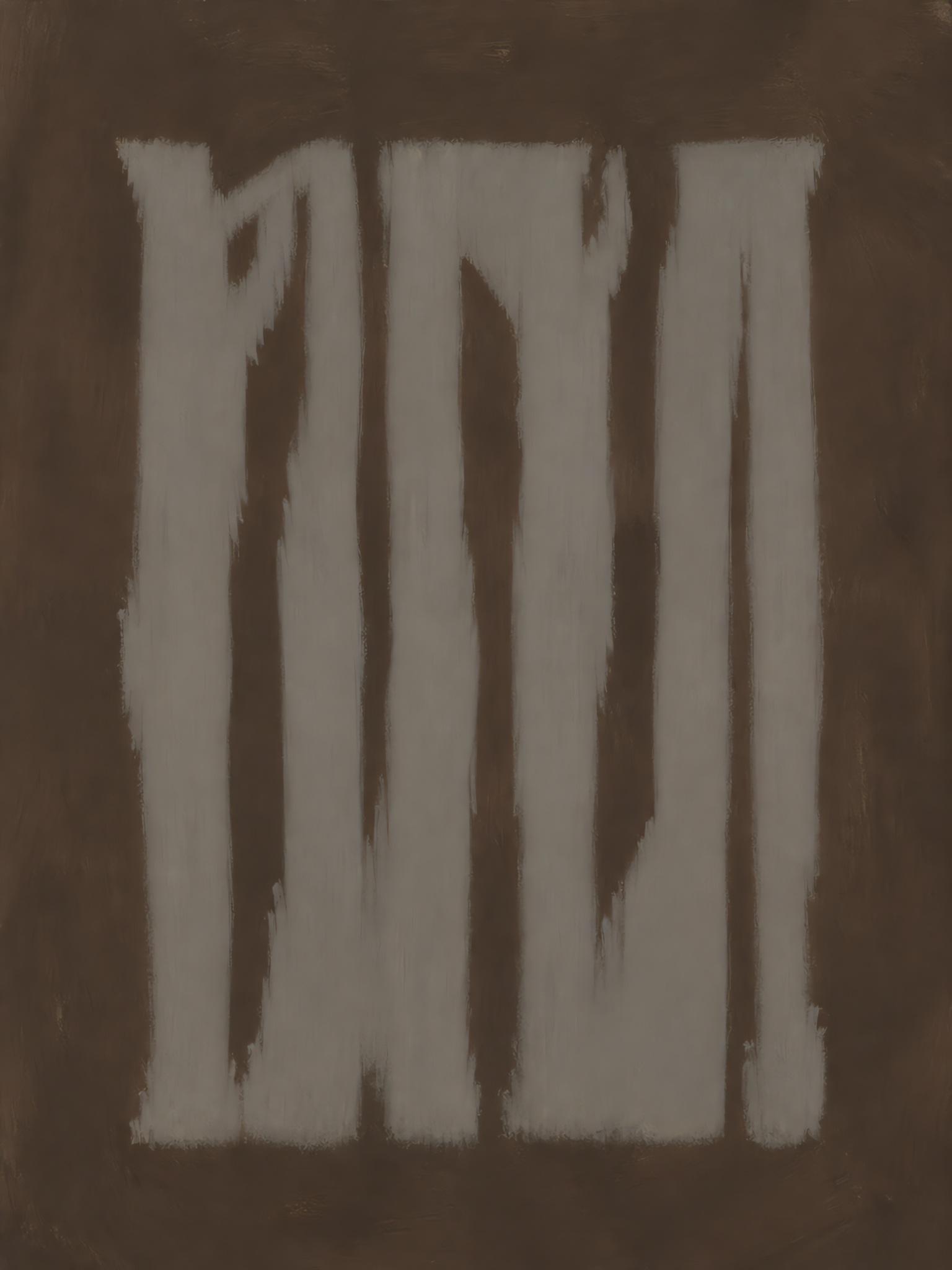
The Moody Brown & Grey Abstract Strokes Textured Canvas is a hand-painted vertical piece where soft chalky grey brushwork breaks across a deep espresso ground. It reads as calm, architectural, and slightly weathered, making it a strong focal point for wabi-sabi, Japandi, and minimalist interiors built around walnut wood, linen, and warm taupe tones.
Quick read
Moody, vertical, hand-painted — a quiet abstract with real presence.
Product reference
The first thing you notice about the Moody Brown & Grey Abstract Strokes Textured Canvas is its weight. Not physical weight — visual weight. Long chalky grey strokes rise vertically across a deep espresso ground, uneven at the edges, softened where the brush lifted. It reads less like a painting of something and more like a mark left behind. That quality is what makes it work as a focal piece rather than just wall filler.
This is a hand-painted abstract canvas in the wabi-sabi and minimalist tradition — grounded, tonal, and built from a small palette. The brown is warm, closer to roasted coffee than black. The grey has a slightly cool, dusty finish that keeps the piece from feeling heavy. Together they create the kind of muted contrast that photographs quietly but holds a room in person.
How It Reads in a Room
The vertical composition does a lot of the styling work for you. It pulls the eye up, which makes ceilings feel taller and narrow walls feel intentional. Above a low walnut sofa or a linen bed, it acts almost like a column of light — anchoring the wall without crowding the furniture below it.
In daylight, the texture comes forward and you can see the direction of the brushwork. Under lamplight, it flattens into something moodier and more atmospheric, closer to a shadow than a painting. That shift is part of the appeal, especially in rooms that get used more at night — studies, dining nooks, bedrooms with warm bulbs.
Who This Piece Suits
This canvas is a natural fit for interiors already leaning into warm neutrals: walnut wood, unbleached linen, warm taupe upholstery, aged brass, vintage ceramics. It also holds up well in Japandi and quiet minimalist spaces where most of the room is soft and pale, and the wall art is meant to bring the visual gravity.
It's less suited to bright, high-contrast rooms with cool whites, glossy finishes, or saturated color. In those spaces the moodiness can feel out of place rather than intentional.
What to Expect (and What Not To)
Because it's hand-painted, the strokes, edges, and texture will vary slightly from the listing image. That's the point — the imperfect edges are what give it the wabi-sabi feeling in the first place. If you're looking for a crisp, graphic, print-perfect abstract, this isn't that piece. If you want something that looks made rather than manufactured, it delivers.
Compared to a flat printed brown abstract or a framed neutral line drawing, this canvas carries more presence at the same size. It doesn't need a mat, a heavy frame, or a gallery wall around it to feel finished.
A Real Styling Scenario
Picture a small home office with a walnut desk, a linen curtain, and a brass task lamp. The wall behind the desk is narrow — too narrow for a horizontal piece, too tall to leave blank. This canvas fits that wall almost exactly, its verticality echoing the curtain folds and the lamp stem. During the day it recedes into the warm tones of the room. At night, under the lamp, it becomes the quietest, most grounding thing in the space.
Product Details
- Type: Hand-painted textured canvas, studio exclusive
- Palette: Deep espresso brown ground with chalky, dusty grey vertical strokes
- Composition: Vertical, column-like, slightly irregular edges
- Finish: Visible brushwork and subtle surface texture
- Style direction: Wabi-sabi, minimalist, Japandi-friendly abstract
- Best rooms: Living room above a low sofa, bedroom behind a headboard, home office on a narrow focal wall
- Pairs well with: Walnut wood, unbleached linen, warm taupe upholstery, brass and vintage accents
- Placement note: Works best as a standalone focal piece rather than in a gallery cluster
For warm, quiet interiors that want a single grounded statement instead of a busy wall, take a closer look at the Moody Brown & Grey Abstract Strokes Textured Canvas.