
A Quiet Pause in Sage: The Textured Figure Wine Glass Painting
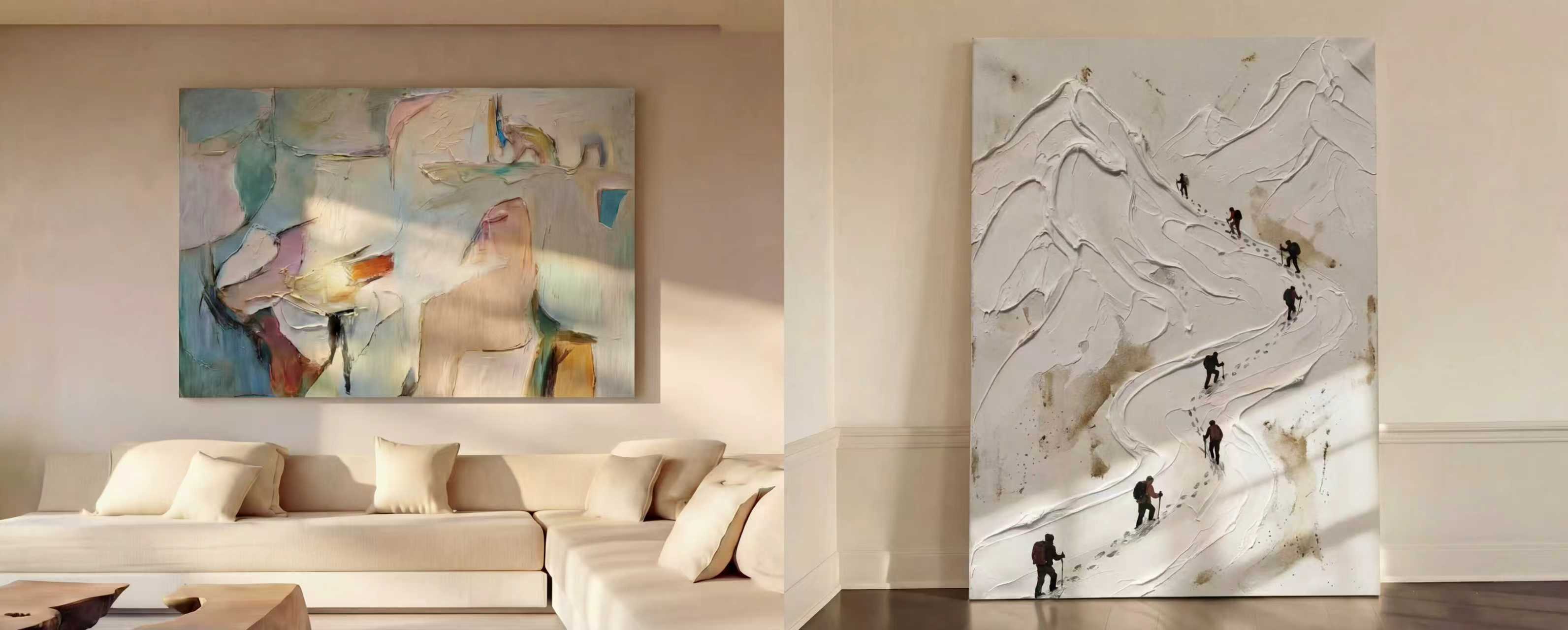
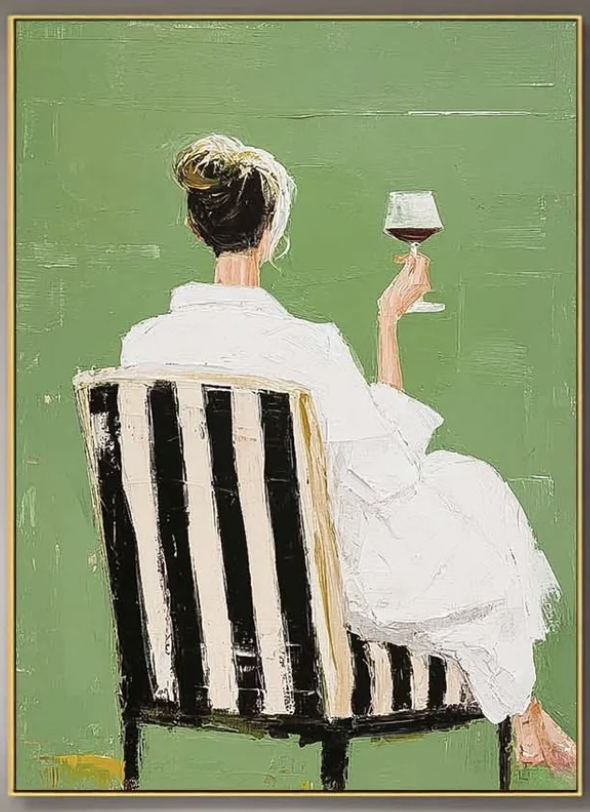
The Textured Figure Wine Glass is a hand-painted canvas showing a seated figure from behind, dressed in white, raising a wine glass against a muted sage green field. Its thick brushwork, striped chair, and low, off-center composition make it a calm but graphic focal piece that works well in dining rooms, living rooms, and foyers styled around warm wood, black metal, and soft neutrals.
Quick read
Painted with visible ridges and gesture, not polish.
Product reference
The first thing you notice is the green. A muted, dusty sage fills most of the canvas, and against it sits a woman in a loose white dress, turned away, lifting a glass of red wine. The paint is thick enough that you can see the ridges from across the room — brushstrokes catch light along her shoulders and run in vertical bands down the black-and-cream striped chair back. It's a figure painting, but it behaves more like a mood piece.
Nothing in the image is trying to move quickly. The gesture is paused mid-thought, the composition weighted low and to the left, and the upper right is left almost empty. That empty space is doing real work: it gives the piece breathing room and lets the texture register instead of competing with detail.
What Kind of Wall Art This Actually Is
This is a hand-painted textured figure canvas, not a print. The surface has physical relief — you can see where the brush loaded up and where it dragged. That matters for how the piece reads under different light. In daylight, the sage flattens slightly and the figure feels graphic and calm. Under a warm lamp in the evening, the ridges throw small shadows and the whole surface starts to look more sculptural.
Stylistically, it sits between organic modern and soft contemporary. There's a wabi-inspired quality to the brushwork, but the striped chair and the clean silhouette of the dress keep it from feeling rustic. It's expressive without being loud.
How It Behaves in a Room
The green ground is the deciding factor for most buyers. It's warm enough to work with oak, walnut, and cream linen, and it holds up next to matte black metal without clashing. On a white or bone-colored wall, the sage reads as a soft accent. On a deeper wall — clay, olive, warm gray — it settles in and the figure becomes the focal point instead of the color.
Because the composition is off-center, the piece hangs best where it has a little room around it. Crowded gallery walls tend to flatten the texture. Given a single wall, or paired only with a lamp and a low piece of furniture, it does much more.
Where It Tends to Land
- Dining room: On the wall a seated guest faces, the raised glass mirrors what's happening at the table. Above a sideboard or buffet also works well.
- Living room: Above a low sofa or console, especially with black-framed furniture or cream upholstery that echoes the chair stripes.
- Foyer: Centered on a narrow entry wall, it gives arriving guests one unhurried image instead of a cluttered welcome.
- Bedroom or home office: Works as a quieter supporting piece when you want figure art without a portrait's directness.
Realistic Expectations
A few things worth knowing before it goes on the wall. The figure is intentionally low on detail — no facial features, no fine rendering. If you're looking for a classical portrait, this isn't that. It's closer to a gesture study built in paint.
The texture also means each canvas has its own small variations. That's part of the appeal of hand-painted work, but it's different from the flat, uniform look of a giclée print. Buyers comparing this against printed figure art usually land here because they want the surface to feel made, not manufactured.
A Quick Styling Scenario
Picture a dining room with a warm oak table, black metal pendant, and cream linen chairs. The wall opposite the head of the table is bare. Hung there, the painting lines up with eye level for seated guests, the sage green cools the wood tones, and the striped chair in the image plays quietly against the linen in the room. Nothing competes. The piece anchors the wall and the room feels finished.
Product Details
- Type: Hand-painted canvas, original brushwork with visible texture
- Subject: Seated female figure from behind, raised wine glass
- Palette: Muted sage green ground, cream and black striped chair, white dress, soft peach skin tones, deep red wine accent
- Style direction: Organic modern, 3D textured, soft contemporary figurative
- Best rooms: Dining room, living room, foyer, bedroom, home office
- Pairs well with: Warm oak wood, matte black metal, soft cream linen, neutral or clay-toned walls
- Placement notes: Give it space; avoid dense gallery walls. Works above sofas, sideboards, consoles, or as a solo entry-wall piece.
It's a quiet piece with real presence — the kind of wall art that slows a room down without dimming it. If it feels like the right fit for your space, you can see the full piece here: Textured Figure Wine Glass.