
The Quiet Weight of Textured Green Mountain Ridges
This piece is a hand-painted, three-dimensional landscape that trades scenic detail for tactile ridgelines. Its sage, moss, and pale grey-green tones settle into calm rooms, working best above a low sofa, a headboard, or across from a desk where its raked surface can catch daylight and lamplight in different ways.
Quick read
Not painted scenery — carved terrain in sage and moss.
Product reference
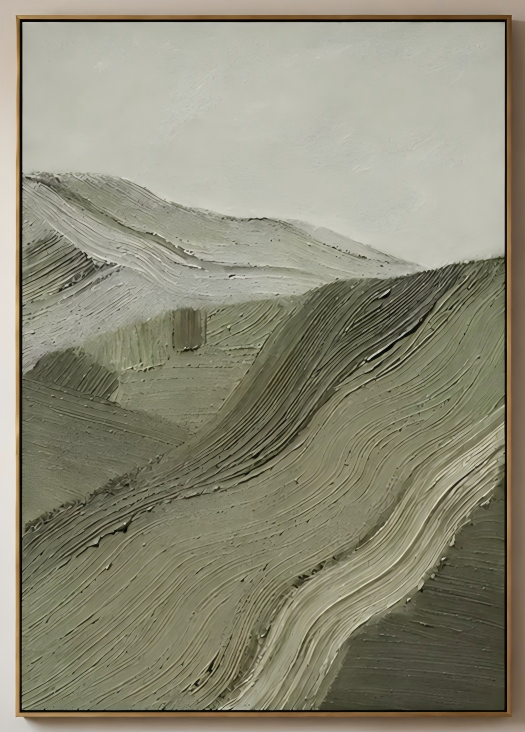
At first glance, Textured Green Mountain Ridges doesn't look like a painting of mountains so much as a slow, sculpted impression of them. Combed strokes of sage, moss, and pale grey-green run in parallel across the canvas, thickening in the foreground and thinning into an ivory sky. The surface is heavily built — plaster-like ridges catch light along every fold, and the whole piece shifts subtly depending on where you're standing.
It's a hand-painted canvas, not a print, and that matters here. The texture is the subject. A small rectangular notch of warmer tone breaks the rhythm near the middle, giving the eye a quiet place to rest without softening the overall discipline of the composition.
How It Reads in a Room
This is calm wall art, but not a wallflower. The physical relief means it changes throughout the day: crisp and graphic under morning light, softer and more atmospheric under a warm lamp in the evening. From across a living room, it reads as a single grounded landscape. Up close, it turns almost topographic — you notice the grooves, the drag of the tool, the places where the paint stops and starts.
It behaves like a focal point without demanding one. Because the palette stays inside a narrow band of muted greens, it doesn't fight nearby materials or accent colors. It anchors instead of competing.
Who It's For
This piece leans toward rooms shaped by natural materials and restraint — Japandi interiors, contemporary wabi-inspired spaces, and rustic modern homes that favor soft, unforced palettes over bold contrast. If your room already relies on light oak, walnut, warm linen, and taupe accents, the greens here fold in without adjustment.
It's less suited to high-contrast, saturated interiors or rooms styled around glossy finishes. The matte, sculpted surface wants to sit near other honest textures: raw wood, wool, ceramic, stone.
Realistic Expectations
A few things worth knowing before it goes on the wall:
- The texture is real and heavy. Photos flatten it. In person, the ridges cast small shadows that photos rarely capture.
- The color is quiet. If you're expecting vivid green, this reads closer to sage-into-olive with a chalky, plaster-like softness.
- It rewards side lighting. A wall sconce, floor lamp, or window at an angle brings out far more depth than direct overhead light.
Compared to Nearby Options
Against a flat printed landscape, this piece trades scenic clarity for physical presence — you lose literal detail and gain surface. Against louder abstract paintings, it's more architectural and less expressive; the mood is steady rather than dramatic. And compared to minimalist beige or ivory textured art, the green pulls it toward landscape territory without making it a straightforward mountain scene.
A Quick Styling Scenario
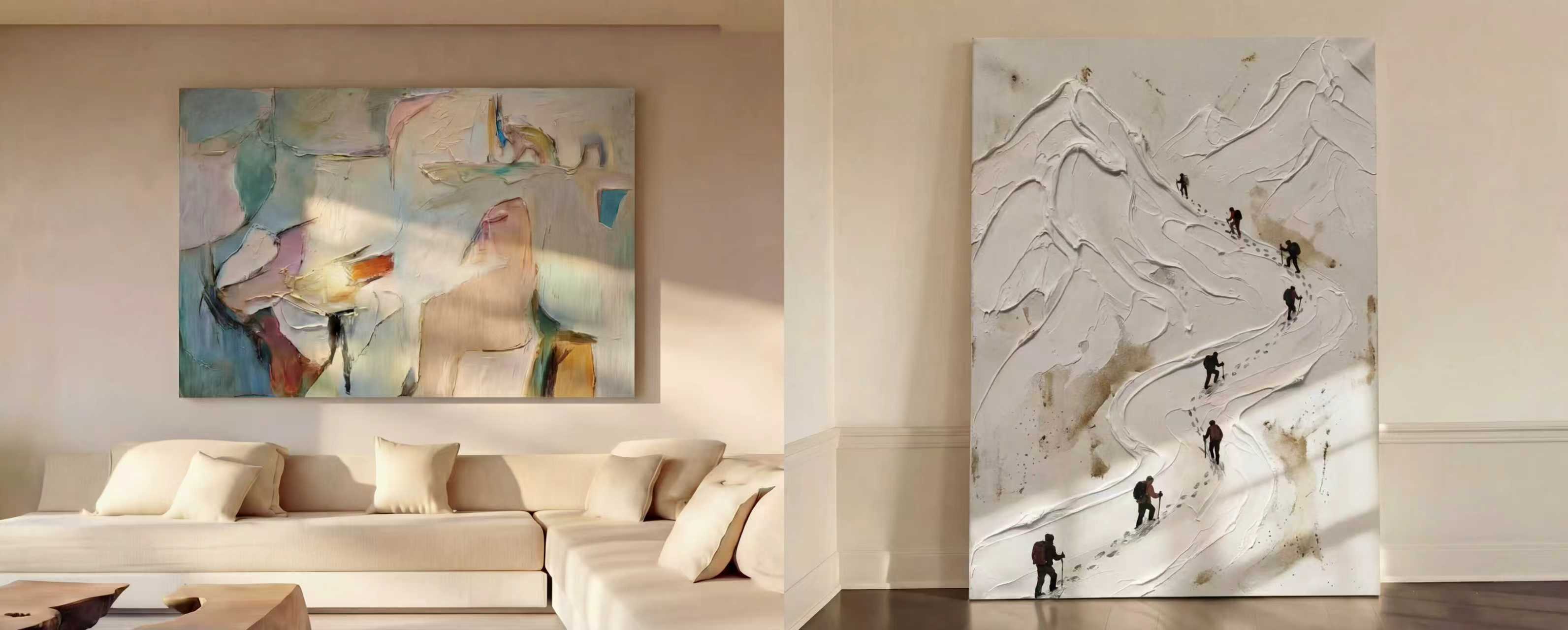
Picture a living room with a low, linen-upholstered sofa in warm oatmeal, a light oak coffee table, and a ceramic lamp with a linen shade. Centered above the sofa, this canvas gives the wall weight without darkening the room. Swap to a bedroom setting and it works just as well above a headboard, where its horizontal rhythm mirrors the bed and quiets the space for early mornings.
Product Details
- Type: Hand-painted canvas wall art, not a print
- Style: Abstract landscape with 3D textured, wabi-sabi finish
- Palette: Sage, moss, olive, pale grey-green, ivory
- Surface: Heavily built, plaster-like ridges with parallel comb strokes
- Best placement: Above a low sofa, above a headboard, or on the wall opposite a desk
- Pairs with: Light oak or walnut furniture, linen upholstery, soft taupe accents, warm neutral walls
- Interior directions: Japandi, contemporary wabi-inspired, rustic modern
If you're drawn to wall art that feels sculpted rather than illustrated, take a closer look at Textured Green Mountain Ridges.