
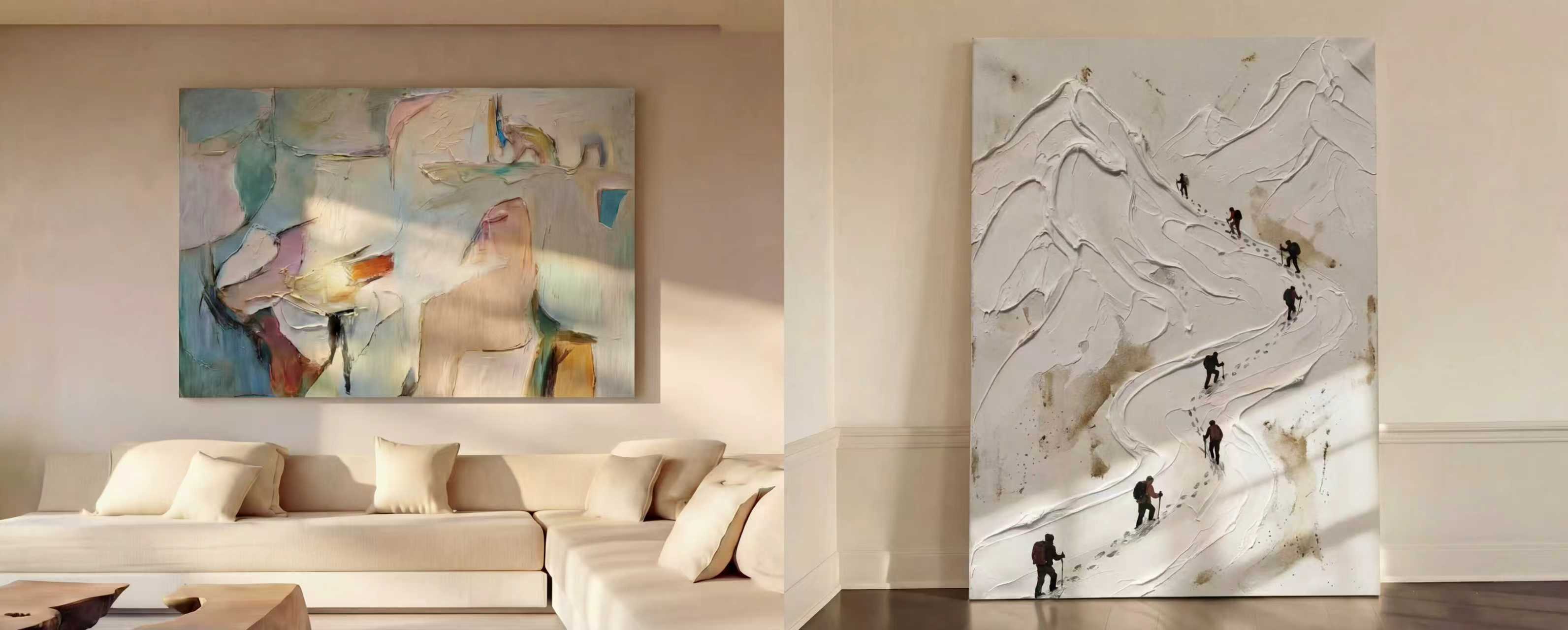
Textured Grid Quiet Rows: A Study in Shadow and Restraint
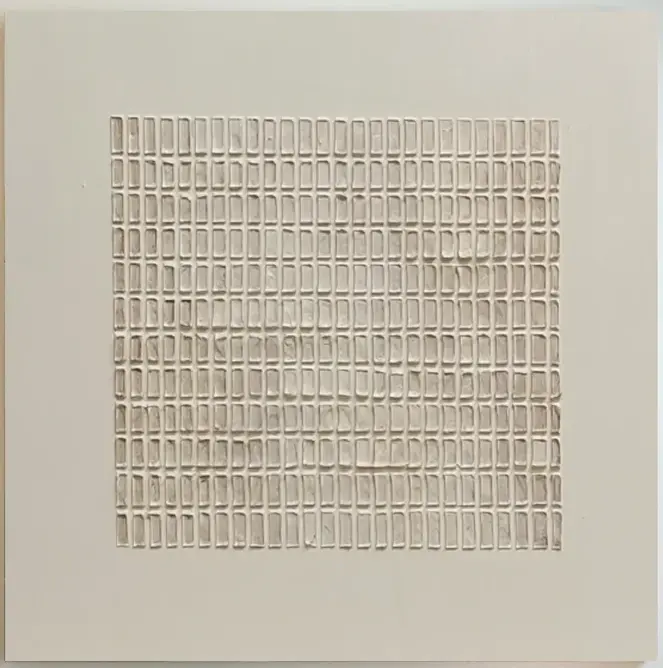
Textured Grid Quiet Rows is a hand-painted canvas covered in a dense field of raised rectangular forms in bone and warm grey. It leans on shadow, repetition, and small hand-made variances rather than color contrast, making it a quiet, architectural piece suited to foyers, living rooms, and dining walls where texture does the talking.
Quick read
A grid that behaves less like a pattern and more like a slow, tactile rhythm.
Product reference
The first thing you notice about Textured Grid Quiet Rows is not a color or a subject, but a rhythm. Rows of small raised rectangles run edge to edge across the canvas, each one catching light along its top edge and dropping a soft shadow into the groove beside it. There is no drawn line, no bold contrast, no obvious focal point — just a steady, hand-formed grid in bone and warm grey.
From a few steps back, it reads as pattern. Move closer and the piece changes: the units are not identical, the depths shift slightly, and near the center a faint suggestion of a face emerges through shadow alone. It is a quiet painting that keeps giving something back the longer you look.
What Kind of Wall Art This Is
This is a textured canvas wall art piece in the neutral abstract family, with clear ties to minimalist and wabi-sabi sensibilities. The palette stays inside a narrow tonal range, so the visual interest is carried entirely by relief, repetition, and light. Think of it less as a painting to decode and more as a surface to live with.
That framing matters when you compare it to other abstract options. A high-contrast abstract asks the room to respond to it. A textured neutral like this one asks the room to sit alongside it.
How It Reads in a Room
Because the piece relies on shadow, lighting shapes how it feels through the day. In morning daylight the grid looks crisp and architectural. Under a warm lamp in the evening, the shadows deepen and the surface feels softer, almost woven. Side lighting — a wall sconce, a nearby table lamp — is where it looks most alive.
Tonally it belongs with light oak, linen, bouclé, aged brass, and warm white walls. It also holds up next to darker woods and matte black hardware, where the bone palette provides visual relief without introducing a competing color.
Where It Works Best
- Foyer or entry wall: rewards both the glance on the way in and the closer look on the way out.
- Above a low console or sideboard: the horizontal calm of the grid balances the horizontal line of the furniture.
- Living room, above a sofa: works as a quiet anchor without pulling focus from seating and textiles.
- Dining room end wall: gives the eye a restful surface between courses.
- Home office or bedroom: its low visual noise makes it easy to sit with for long stretches.
Realistic Expectations
A common misread is expecting a bold statement piece. This is not that. Its power is cumulative — it sets a tone rather than announcing one. If your wall needs a single dramatic focal point in strong color, look elsewhere. If you want a piece that adds depth, craft, and calm to a neutral scheme, this is the register it lives in.
The hand-formed nature of the grid also means slight irregularities are part of the work, not flaws. Each raised unit carries small variations in edge and depth. Up close, that is the point.
A Quick Styling Scenario
Picture a living room with a low oak console against a warm white wall, a ceramic lamp on one side, and a small stack of books on the other. Hang the piece centered above the console with about six to eight inches of breathing room. Switch the lamp on at dusk and the grid pulls into relief, giving the whole vignette a soft, sculptural weight it did not have before.
Product Details
- Type: hand-painted textured canvas wall art
- Style: neutral abstract, minimalist, wabi-sabi, 3D textured
- Palette: bone and warm grey, low contrast
- Surface: dense grid of raised rectangular forms, hand-formed, with subtle depth variation near the center
- Best rooms: living room, foyer, dining room, home office, bedroom
- Pairs with: light oak, linen, warm whites, aged brass, matte black hardware
- Lighting note: side lighting and warm lamps deepen the shadow play
For neutral rooms that need depth without noise, look at Textured Grid Quiet Rows.