
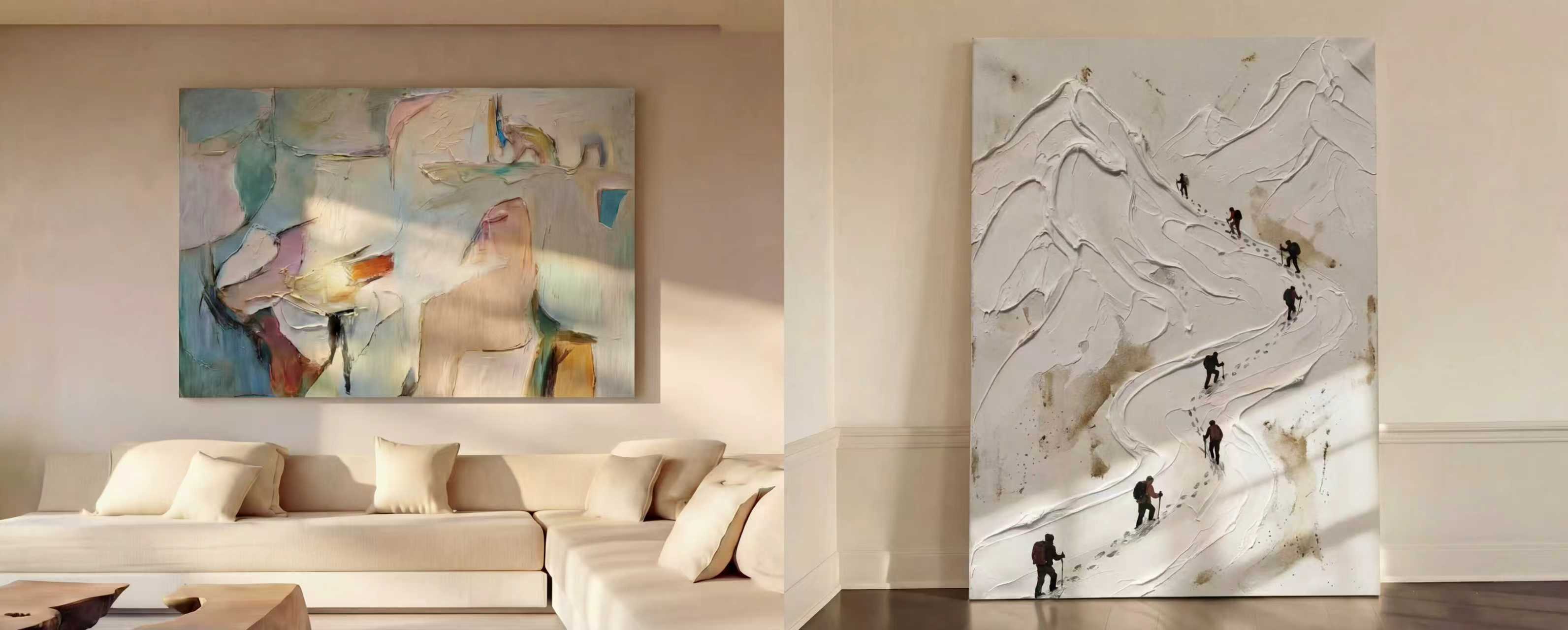
The Quiet Weight of a Textured Mountain Descent
Textured Mountain Landscape Descent is a hand-painted canvas with sculptural ridgelines carved across its surface. The color moves gradually from cool grey to warm umber, giving the piece depth through texture and shadow rather than bold contrast. It works as an anchor above a low sofa, on a dining end wall, or across from a home-office desk in neutral, wood-forward interiors.
Quick read
A painting that behaves like relief — quiet, tactile, and slow to reveal itself.
Product reference
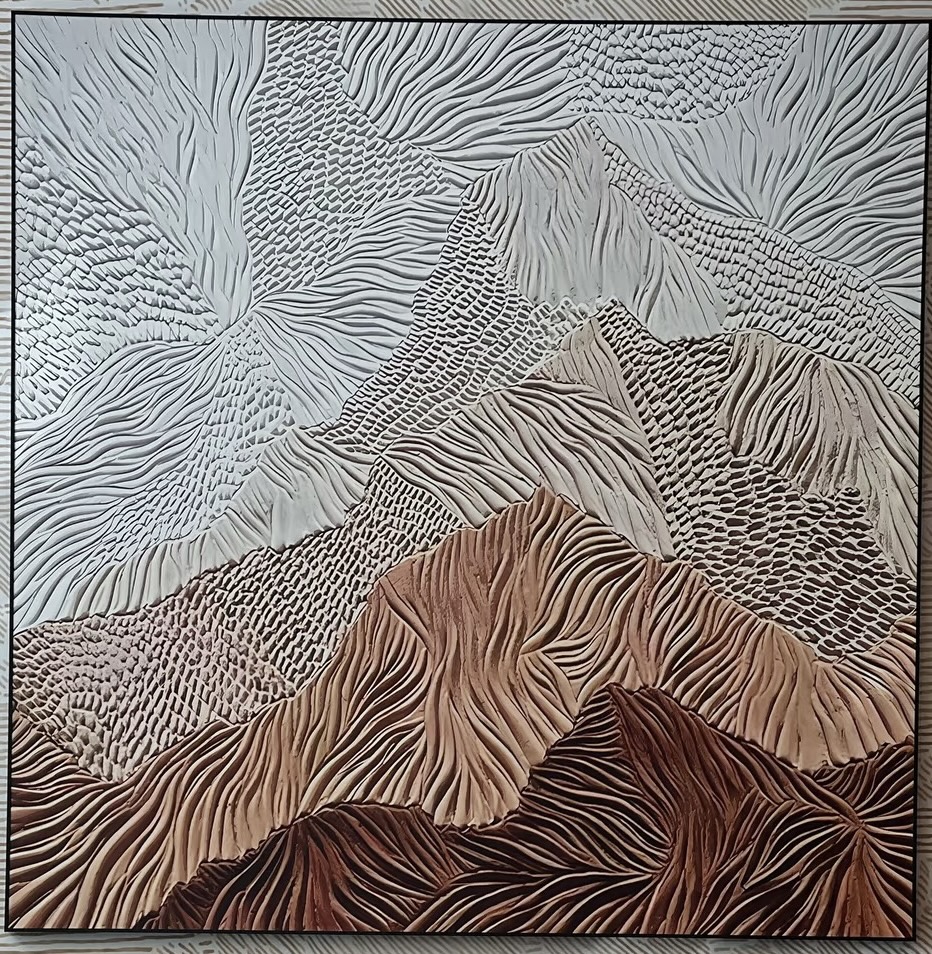
The first thing you notice about Textured Mountain Landscape Descent isn't the mountains — it's the surface. Ridgelines are carved into the canvas in dense, directional grooves, and the paint sits high enough that the piece behaves like a shallow relief. From a few steps back it reads as landscape. Up close, it reads as terrain you could run your hand across.
The composition moves diagonally from a pale silver-grey sky into warm terracotta and umber at the base. There are no hard outlines. Each mountain plane is separated by tonal shift and shadow, which gives the whole piece a layered, geological rhythm rather than the crisp graphic feel of a printed landscape.
How it reads in a room
This is a grounded, tactile piece — not a loud one. The color range stays inside a neutral, earth-driven palette, so it settles into a room instead of demanding it. What carries the drama is the surface: tight cross-hatched patterning on some slopes, long parallel strokes on others. Under daylight it looks softer and more atmospheric. Under lamp light, the grooves cast real shadows and the ridges sharpen.
That's the main reason to choose a hand-painted, 3D textured canvas over a flat print. A print of a mountain is an image. This one changes through the day.
Who it suits
The piece leans into rustic modern, Japandi, and wabi-inspired interiors — rooms already using oak, walnut, raw linen, plaster, or stone. If your space is built around clean neutrals and natural materials, the earth tones fall into place quickly. It's less at home in high-gloss, high-contrast, or heavily colored rooms, where the subtle tonal transitions can get lost.
Think of it as a focal piece that still behaves quietly. It anchors a wall without stealing the room.
Placement that actually works
Above a low, neutral sofa is the most natural fit. The horizontal weight of the ridgelines echoes the horizontal line of the seating, and the warm base tones pick up any linen, leather, or wood in the seating group. On a dining room end wall — the one you see from the table — it holds attention across the room, especially alongside a wooden table and matching chairs.
In a home office, hang it across from the desk rather than behind it. The varied texture gives the eye a place to rest between tasks without pulling focus like a graphic or figurative piece would.
A short styling scenario
Picture a living room with a low taupe linen sofa, a light oak coffee table, and a wool rug in a soft oatmeal tone. The wall behind the sofa is bare plaster or a warm off-white. Center the canvas above the sofa, roughly six to ten inches above the backrest. A single warm-toned floor lamp to one side is enough — the sidelight will catch the grooves and give the ridges dimension after sunset. No gallery wall needed. The piece carries the wall on its own.
Common misreads
Two things tend to surprise buyers. First, the piece is more sculptural than photographs suggest — the texture is genuinely built up, not a printed effect. Second, the color palette is quieter in person. If you're expecting saturated terracotta, you'll find something more restrained and dusty, closer to weathered clay than bright rust.
Product details
- Type: Hand-painted canvas, heavily textured 3D surface
- Style: Abstract landscape with wabi-sabi and sculptural leanings
- Palette: Silver-grey fading into terracotta, umber, and warm clay
- Finish: Matte, carved relief texture with directional grooves and cross-hatched passages
- Best rooms: Living room above a low sofa, dining room end wall, foyer, bedroom, home office across from the desk
- Pairs with: Light oak, raw walnut, warm taupe linen, plaster walls, stone accents
- Interior directions: Rustic modern, Japandi, contemporary wabi-inspired
For rooms that lean neutral but still want something with weight, take a closer look at Textured Mountain Landscape Descent.