
Textured Palm Leaves Amber Drift: A Warm, Sculpted Botanical for Modern Walls
This vertical botanical piece uses raised plaster texture and a warm neutral palette to bring quiet height and tactile depth to a wall. It suits calm, earth-toned interiors — Japandi, wabi-inspired, or rustic modern — and works especially well above a low sectional, on a dining end wall, or centered above a headboard.
Quick read
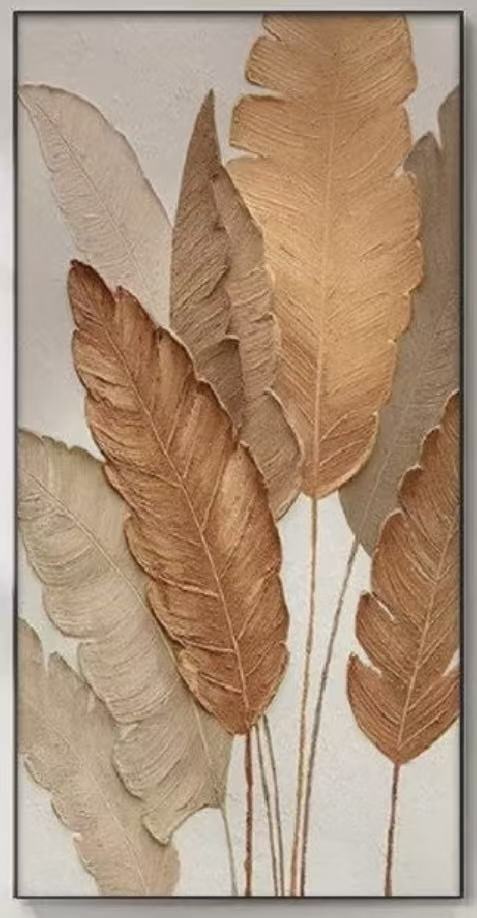
Sculpted palm fronds in amber and taupe, painted by hand on a chalky off-white ground.
Product reference
The first thing you notice about Textured Palm Leaves Amber Drift is the height. Tall feathered fronds rise from a narrow base and fan outward, painted by hand in raised, plaster-like ridges that follow each vein line. The palette stays close to the earth — warm terracotta anchoring the lower left, honeyed amber running through the center, soft taupe drifting toward the edges — all set against a chalky off-white ground that lets the texture do most of the talking.
It reads as a sculpted botanical rather than a painted one. From across the room, the silhouette is graphic and calm. Up close, the surface breaks into ridges and shadow lines that shift with the light.
How it reads in a room
This is a piece that adds vertical lift without adding noise. The composition pulls upward from a tight cluster of stems, so it lengthens a wall the way tall drapery or a slim floor lamp does. Color contrast stays low, which means it settles into a space instead of competing with the furniture around it.
In daylight, the plaster ridges look matte and sandy. Under lamplight, the amber tones warm up and the texture casts small shadows across the canvas — the piece essentially has two moods, morning and evening, without changing anything about the room.
Where it fits
The natural home is a calm, earth-toned interior: Japandi, contemporary wabi-inspired, or rustic modern. It sits comfortably next to light oak, unlacquered wood, natural rattan, linen, and ceramic. If your palette already leans toward warm neutrals, this piece will feel like it belongs rather than like it was added.
Placement-wise, three spots do most of the work:
- Above a low sectional — the vertical lines echo ceiling height without crowding the seating.
- On a dining end wall — especially facing the table, alongside wood or rattan chairs.
- Above a headboard — centered in a warm neutral bedroom, flanked by light wood nightstands.
It also holds up well in a foyer or home office where you want presence without a heavy visual footprint.
What to expect, honestly
A few things are worth setting straight before it arrives. This is a textured canvas, not a smooth print — the ridges are physical, and the surface won't read flat under any lighting. The palette is warm and earthy, not bright or saturated; if your room leans cool gray or high-contrast black-and-white, the piece will still work, but it will introduce warmth rather than match what's already there.
It's also more of a focal point than a supporting piece. In a gallery wall, the texture and scale tend to overpower smaller framed prints around it. It performs best on its own, on a wide wall, with room to breathe.
How it compares
Against a flat botanical print, this piece trades crisp detail for depth and material feel. Against a heavier abstract oil, it stays quieter and more architectural — closer to sculpture than to painting. If you've been weighing 3D palm leaf wall art against a standard neutral leaf painting, the difference here is tactile: the plaster surface changes how the piece behaves with light, and that's the reason to choose it.
A quick styling scenario
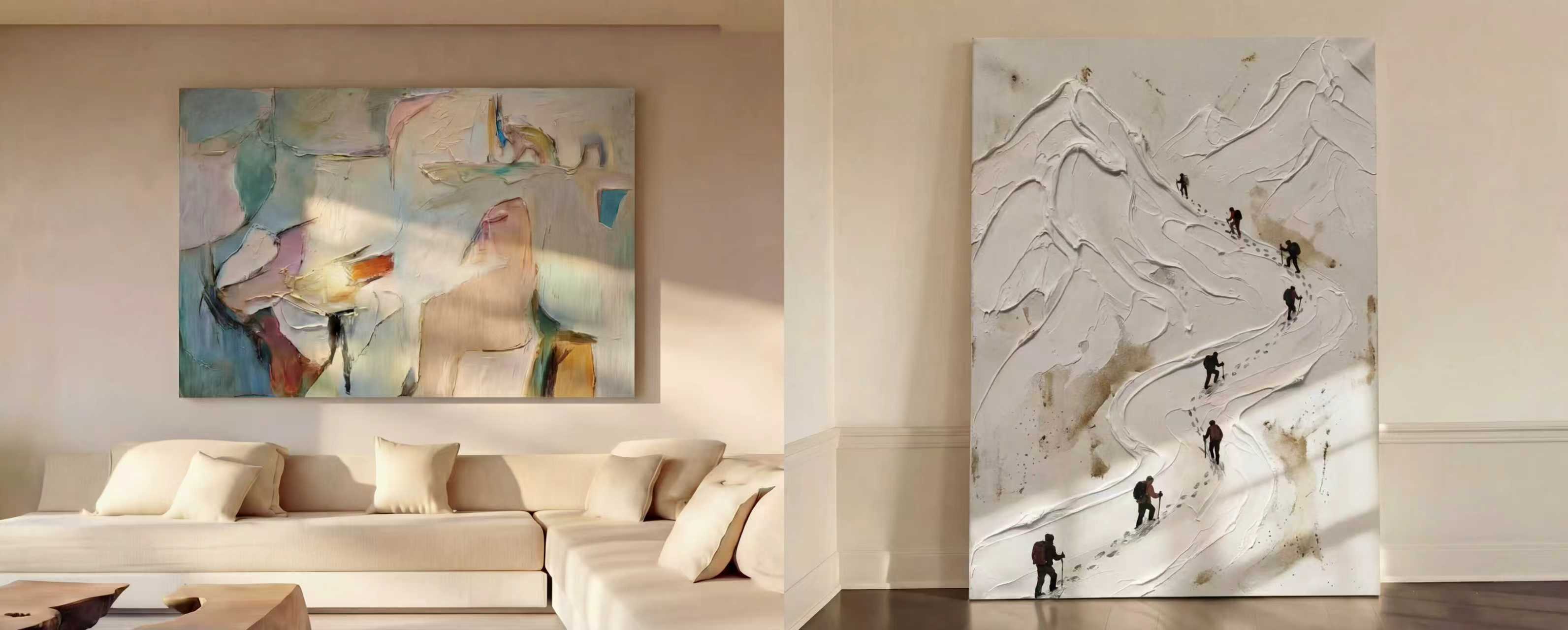
Picture a living room with a low oatmeal sectional, a jute rug, and a light oak coffee table. The wall behind the sofa is wide and mostly empty. Centering this canvas there pulls the eye upward, warms the neutral palette with terracotta and amber, and gives the room a natural focal point without adding another color story. Add a ceramic table lamp nearby and the texture picks up beautifully after sunset.
Product details
- Type: Hand-painted textured canvas wall art
- Style: Abstract botanical, 3D textured, organic modern
- Palette: Warm terracotta, honeyed amber, soft taupe, chalky off-white
- Finish: Raised plaster-like ridges tracing the leaf veins; matte surface that warms under lamplight
- Orientation: Vertical — best on tall or wide walls with vertical breathing room
- Best rooms: Living room, dining room, bedroom, foyer, home office
- Pairs well with: Light oak, rattan, linen, ceramic, natural fiber rugs
For a closer look at the texture, palette, and available options, see Textured Palm Leaves Amber Drift.