
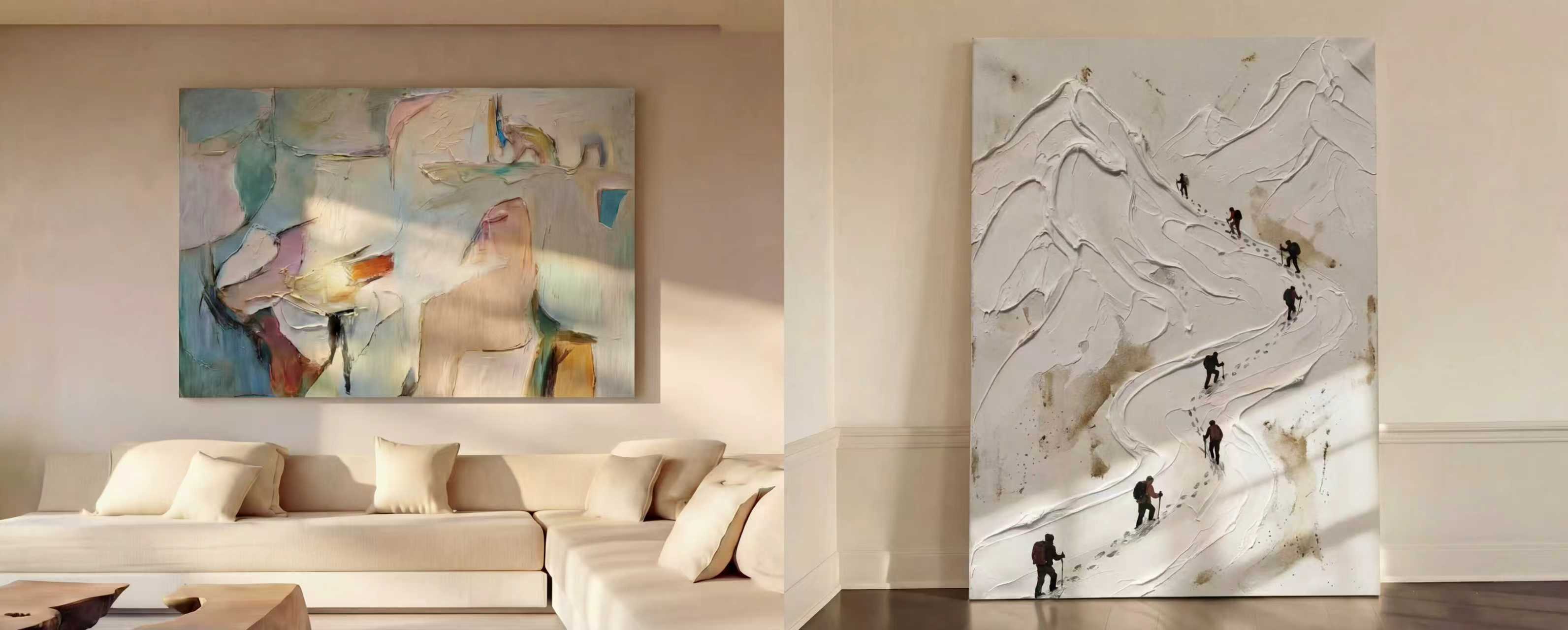
Textured Seascape Coastline: A Quiet Triptych With Real Weight
This triptych uses raised plaster ridges and a slow left-to-right tonal shift to suggest a coastline seen from above. It carries a wabi-sabi calm while holding enough dimension to anchor a long sofa wall, headboard, or dining sideboard in neutral, textural interiors.
Quick read
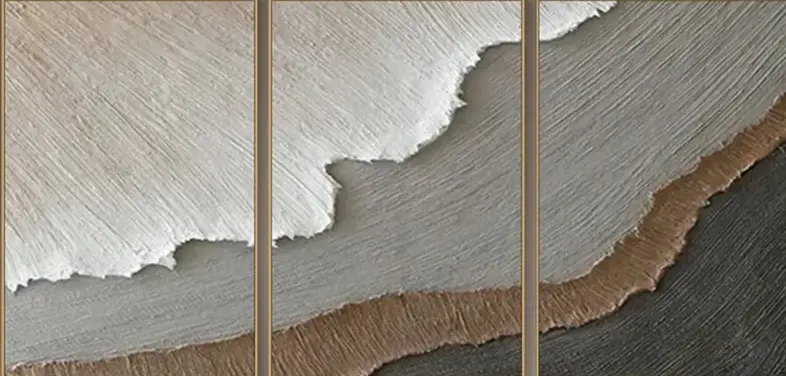
Plaster-white sweeps into warm sand, then settles against slate — a shoreline read from above, in three quiet movements.
Product reference
The first thing you notice about Textured Seascape Coastline is the surface. Plaster-like ridges run in long, combed lines across three panels, catching light unevenly so the piece looks slightly different in morning sun than under a lamp at night. It is abstract, but the reading is immediate: a shoreline seen from above, drawn in ivory, sand, and slate.
The composition moves left to right in a slow tonal drift. Pale plaster whites soften into warm ochre, then deepen into charcoal along the lower right. There is no hard break, no dramatic focal point — just a diagonal seam where colors meet and the eye follows.
How the piece reads in a room
This is a textured coastal wall art piece that behaves more like a quiet architectural element than a statement painting. It fills space without demanding attention. From across the room, it registers as a warm neutral band with a subtle horizon line. Up close, the ridges and plaster feel take over, and the surface starts to look almost sculptural.
That dual behavior is the reason it works in calm, layered interiors. It gives a wall presence and dimension without introducing a new color story or a strong subject.
Who it suits
The piece leans Japandi, contemporary wabi-inspired, and minimalist — rooms built on light oak, warm white linen, stone, and charcoal accents. If your interior already runs neutral and you want something with real texture instead of another flat print, this fits naturally.
It is less suited to high-contrast, saturated, or maximalist rooms. Put it next to bold jewel tones or heavy pattern and the quiet tonal work gets flattened.
Focal point or supporting piece?
At full triptych width, it functions as a focal point on a long wall. But the palette is restrained enough that it can also read as a supporting texture — a horizontal anchor that lets a sofa, bed, or dining table stay the main event. That flexibility is part of what makes it easier to place than a bolder abstract.
A quick styling scenario
Picture a living room with a low linen sofa in warm greige, a light oak coffee table, and a wool rug in soft ivory. Hung above the sofa with the panels spaced tight, the triptych extends the seating line visually and pulls the charcoal from a nearby throw or lamp base into the composition. Under a warm floor lamp in the evening, the plaster ridges throw faint shadows and the piece feels heavier, more grounded.
In a bedroom, the same logic applies behind the headboard. Paired with neutral linen bedding and a wood nightstand, it reads as a calm, horizon-like backdrop rather than decoration.
Common assumptions to reset
Two things worth knowing. First, this is not a literal seascape — there is no water, no sky, no beach. The coastline reference is compositional, not pictorial. Second, because it is hand-painted with a plaster-style finish, the texture is part of the artwork, not a print effect. Expect small variations panel to panel; that is the wabi-sabi character, not a flaw.
Compared to nearby options
Against a flat neutral abstract print, this piece carries more physical weight and more light-play. Against a heavily textured single-panel canvas, the triptych format gives you more horizontal reach and a stronger sense of movement across the wall. And against a traditional framed coastal painting, it trades narrative for atmosphere.
Product details
- Format: Three-panel triptych, hand-painted on canvas
- Style: Abstract, wabi-sabi, 3D textured plaster finish
- Palette: Ivory, warm sand, ochre, slate, charcoal
- Surface: Raised, combed ridges that catch light through the day
- Sizes: Linked triptych sizing — scale the full set to your wall width
- Best rooms: Living room above a low sofa, bedroom behind the headboard, dining room above a sideboard
- Pairs with: Light oak or walnut furniture, linen upholstery, stone or concrete accents
For rooms built on natural materials and restrained color, this piece adds weight without raising the volume — explore the full triptych in Textured Seascape Coastline.