
Wabi Sabi Copper Loops: A Textured Wall Piece That Rewards a Second Look
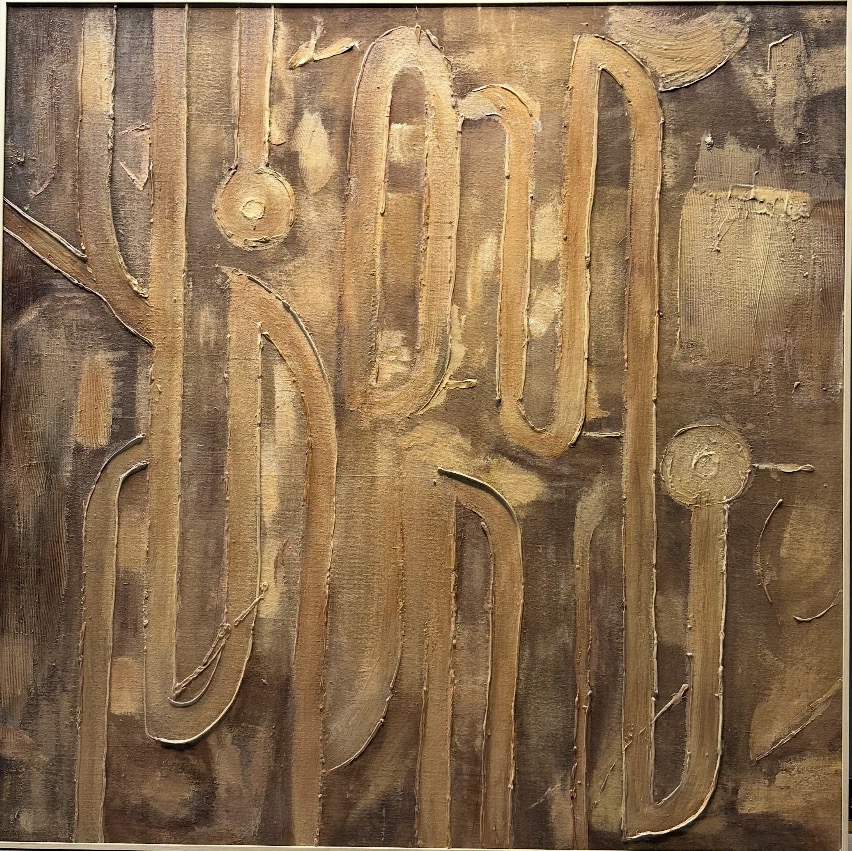
Wabi Sabi Copper Loops is a tactile, hand-painted abstract canvas built from raised bronze and copper lines that loop across a worn umber ground. It behaves like a quiet focal point in warm, lived-in rooms, catching light differently through the day and pairing naturally with walnut, leather, and aged brass.
Quick read
A grounded, hand-worked piece that trades polish for presence.
Product reference
At first glance, Wabi Sabi Copper Loops reads like a line of handwriting that lost its language. Raised bronze and copper loops travel vertically across a weathered brown field, doubling back on themselves, interrupted here and there by small circular knots. It's hand-painted, heavily textured, and built in low relief, so the surface shifts as the light moves across it. From across the room, you see rhythm. Up close, you see the pigment ridges, the pulled-back layers, the quiet wear.
What it actually looks like on the wall
The palette stays inside a narrow earth range — umber, ochre, dull gold, aged bronze — without hard contrast. That matters, because it means the piece doesn't fight the room. It reads as one continuous tonal field with sculptural line work laid over it. In daylight, the copper lifts and the ground recedes. Under lamplight, the ridges throw small shadows and the whole surface feels warmer, almost burnished.
It behaves more like a textured object than a flat image, which is why it holds a wall on its own without needing a gallery arrangement around it.
How it changes a room
This is a grounding piece, not a bright one. It settles a space rather than energizing it. Hung above a low walnut console or a leather sofa, it adds weight and warmth without adding color noise. In a dining room, it gives the eye something unhurried to rest on between courses. In a dim foyer, the relief reveals itself slowly as someone walks toward it — a nice detail for an entry wall that otherwise does nothing.
Rooms that already lean warm, worn, or tactile will absorb it easily. Rooms built around cool grays, high-gloss finishes, or crisp modern minimalism will feel the mismatch.
Who it suits
Buyers drawn to wabi-sabi, Japandi, and rustic modern interiors tend to respond to this kind of surface. It fits homes where the furniture is wood rather than lacquer, where brass has been allowed to age, and where linen, clay, and leather do most of the talking. If you're assembling a room around warm walnut, aged brass fixtures, or soft clay upholstery, the tones line up without much effort.
It's less suited to spaces chasing a crisp, graphic, or high-contrast look. The piece has intentional imperfection built in, and that's the point.
Realistic expectations
Because it's hand-painted with built-up texture, the surface won't look machine-perfect. Ridges vary in height, the ground carries scrapes, and the copper tones shift subtly across the canvas. That's part of what gives it depth, but it also means it reads best in person and in rooms with real light movement. A common misread: assuming it will feel decorative or ornamental. It doesn't. It feels material and quiet, closer to a weathered wall relief than a painting.
How it compares to similar wall art
Against a flat printed abstract canvas, this piece reads heavier and more sculptural — the texture is the subject. Against a monochrome plaster-style art panel, it brings more linear rhythm and metallic warmth. Against a bold color-forward abstract, it's deliberately restrained; it won't be the loudest thing in the room, but it will be the one guests touch.
A short styling scenario
Picture a living room with a low walnut media console, a tan leather sofa, a jute rug, and a single aged brass floor lamp. The wall above the console is empty and feels cold. Hang Wabi Sabi Copper Loops centered above it, bottom edge roughly 8 to 10 inches above the console surface. The copper picks up the brass, the brown ground echoes the walnut, and the leather suddenly has something to talk to. Nothing in the room changes except the weight of it.
Product details
- Type: Hand-painted abstract wall art on canvas
- Finish: Raised relief texture with built-up pigment ridges
- Palette: Umber, ochre, dull gold, aged bronze on a weathered brown ground
- Style direction: Wabi-sabi, Japandi, rustic modern, contemporary earth-tone
- Best rooms: Living room, dining room, foyer, home office
- Placement notes: Above a low wood console, facing a leather sofa, centered above a sideboard, or along a dim entry wall opposite the front door
- Pairs well with: Warm walnut wood, aged brass metal, soft clay upholstery, linen, leather
Because each canvas is hand-worked, expect small variations in the ridges, knots, and surface wear — part of why it feels aged rather than manufactured.
If this is the kind of grounded, tactile wall art your room has been missing, take a closer look at Wabi Sabi Copper Loops.