
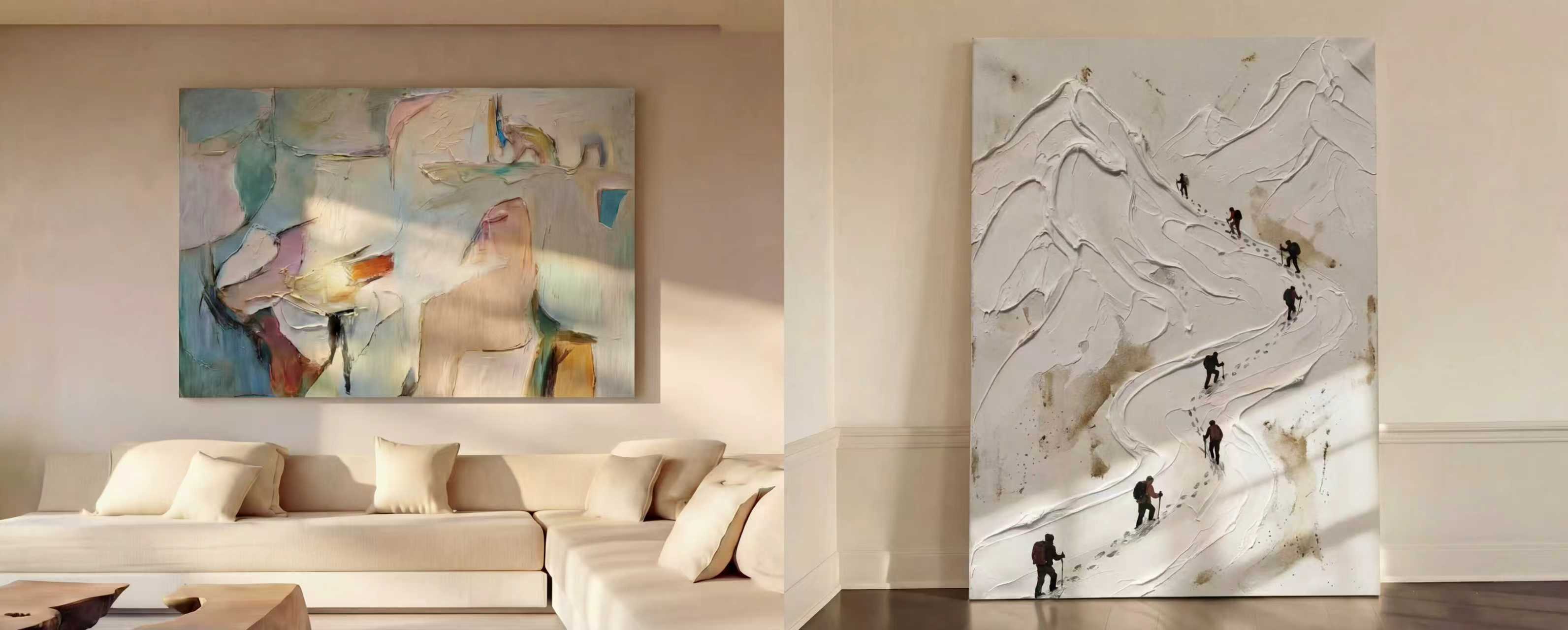
A Quiet Pause: Living With a Wabi-Sabi Neutral Canvas
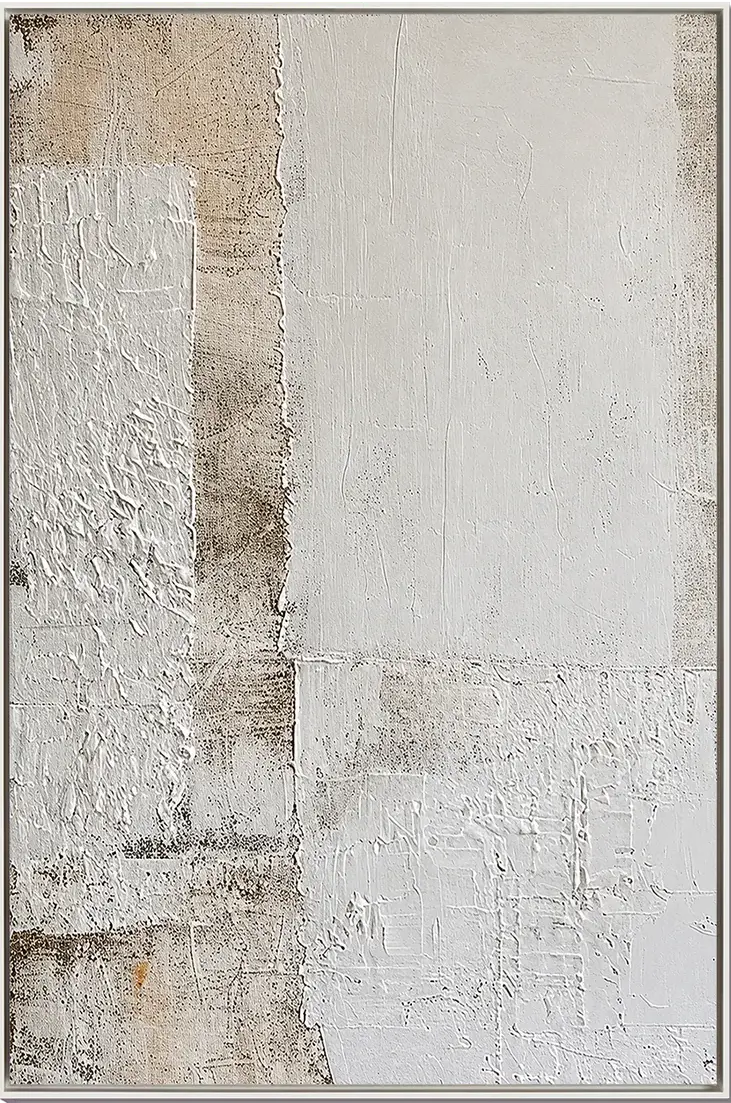
This vertical hand-painted canvas layers plaster-like whites with warm sand and umber bands, built up through ridges, scrapes, and stippled texture. It behaves as a quiet focal point above a sofa, console, or desk, pairing naturally with light oak, linen, and lime-washed walls in wabi-sabi, Japandi, and minimalist rooms.
Quick read
A built surface, not a brushed one — texture does the talking.
Product reference
The first thing you notice about Wabi Sabi Neutral Quiet Pause isn't a color or a shape — it's the surface. The canvas looks built rather than painted, with ridges, scrapes, and dense stippled passages that catch light the way an old plaster wall does. Vertical fields of chalky white meet warm sand and umber in uneven, hand-worked bands, and the composition leans into imperfection without feeling unfinished.
It reads as a quiet piece from across the room and a tactile one up close. That shift is really the point.
What Kind of Wall Art This Actually Is
This is a hand-painted textured canvas in the wabi-sabi tradition — a neutral abstract painting that treats surface as subject. There's no imagery to decode, no bold gesture to react to. Instead, a raw panel of cream sits against a strip of speckled taupe on the left, while the right opens into a broader, calmer field of off-white. Tension gathers where the rough plaster meets the smoother passages, then releases into open space near the top.
If you've been comparing minimalist line art, muted landscape prints, and heavy abstract canvases, this piece sits firmly in the third camp. It behaves like a textured architectural element on the wall rather than a picture hanging on it.
How It Changes a Room
Vertical format gives it presence without demanding a lot of horizontal wall. In a living room, it anchors the space above a low, linear sofa and keeps the palette grounded — earthy neutrals that settle in rather than compete. In a foyer, it holds an end wall well, greeting the room with restraint. Facing a desk in a home office, the texture gives your eyes somewhere soft to land between tasks.
Under daylight, the ridges and scrapes become more legible, almost sculptural. Under warm lamplight in the evening, the surface quiets down and the piece reads more as a tonal field. Both moods belong to the same painting.
Who It Suits — and Who It Doesn't
This canvas is a natural fit for interiors already leaning into natural, muted materials: light oak, warm white linen, soft taupe upholstery, lime-washed or plaster walls. It supports Japandi, contemporary wabi-inspired, and minimalist directions especially well.
It's less suited to high-contrast, high-color rooms. If your space is built around black metal, saturated jewel tones, or glossy modern finishes, this painting will feel too soft to hold its ground. It's a supporting voice in loud rooms and a focal point in quiet ones.
Common Assumptions Worth Correcting
A few things buyers tend to misread about neutral textured art:
- Neutral doesn't mean flat. The warm sand and umber passages carry real pigment weight in person.
- Minimal doesn't mean small. Scale this piece generously — undersizing a textured canvas kills the architectural effect.
- Hand-painted means variation. Ridges, stipples, and edge treatment are intentional, not defects.
A Quick Styling Scenario
Picture a living room with a low oatmeal-linen sofa, a light oak coffee table, and a jute rug. The wall behind the sofa is bare and feels unresolved. Hang this canvas centered above the sofa, leaving roughly six to eight inches of breathing room above the backrest. Add a single ceramic vessel on the console nearby. The room goes from quiet-but-empty to quiet-and-composed without changing a single other object.
Product Details
- Type: Hand-painted canvas wall art, vertical orientation
- Style: Wabi-sabi, 3D-textured neutral abstract
- Palette: Chalky white, warm sand, taupe, soft umber
- Finish: Built-up plaster-like surface with ridges, scrapes, and stippled passages
- Best rooms: Living room (above a low sofa or console), foyer (end wall with a narrow console), home office (facing or behind the desk)
- Pairs with: Light oak, linen, soft taupe upholstery, plaster or lime-washed walls
- Works with: Japandi, contemporary wabi-inspired, minimalist interiors
For readers building a calmer, more tactile room, this piece is worth a closer look at Wabi Sabi Neutral Quiet Pause.